Experts in quantum science and technology from around the globe will come together on November 13-14 in Chicago for the sixth Chicago Quantum Summit, continuing an annual event that has helped define an emerging field by spurring conversation across disciplines, institutions, and geography.
The event, hosted by the Chicago Quantum Exchange, will bring together academic, government, and industry leaders to discuss how the field can strengthen and expand the quantum ecosystem amid a growing focus on commercialization, workforce development, and research advancement. The Summit’s speakers come from universities, national labs, and Fortune 500 and startup companies from around the world, representing the increasingly international nature of the quantum ecosystem. It will also highlight the contributions of 14 innovative early-career researchers who will present their work at the 2023 Boeing Quantum Creators Prize symposium on the Summit’s second day.
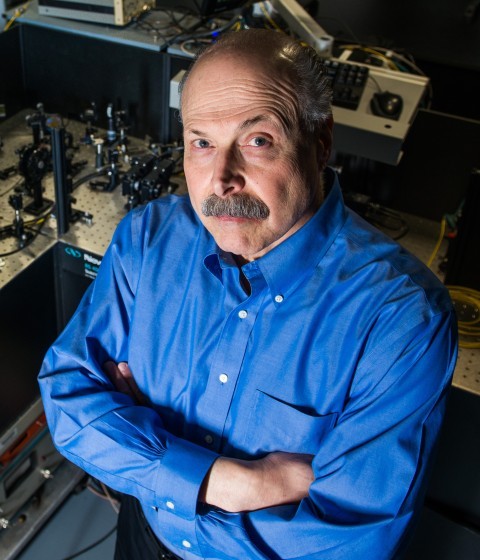
"The Chicago Quantum Summit has been a fruitful way for our community to come together and shape the expanding landscape of our field," said David Awschalom, the Liew Family Professor in Molecular Engineering and Physics at the University of Chicago, director of the Chicago Quantum Exchange, and director of Q-NEXT, a Department of Energy Quantum Information Science Center. “Highlights of this past year include new international partnerships and industrial collaborations - we’re honored to host the quantum community as we continue to chart a course for developing an ecosystem that broadly benefits society.”
Speakers will include Laurie Locascio, director of the National Institute of Standards and Technology (NIST) and undersecretary of commerce for standards and technology at the US Department of Commerce; Stephanie Simmons, founder and chief quantum officer of Photonic Inc. as well as co-chair of Canada’s Quantum Advisory Council and Canada research chair in silicon quantum technologies at Simon Fraser University; and Geri Richmond, undersecretary for science and innovation at the US Department of Energy.
“There has never been a more important time to ensure that the United States is leading the way in critical and emerging technologies, including quantum information science,” Richmond said. “This Summit’s partnership with the Department of Energy’s two nearby National QIS Research Centers, Q-NEXT and SQMS, are key to developing and nurturing the U.S. quantum innovation ecosystem.”
Industry will get a special focus during a panel of quantum startup founders who are current and past participants in the quantum startup accelerator Duality, including Icosa Computing, Ki3 Photonics, SCALINQ, and memQ. It will be moderated by Alex Keesling, the CEO of QuEra Computing, Inc. Attendees will also hear from the venture capital side of the ecosystem with Christophe Jurczak, founder of Quantonation, an early-stage venture capital fund dedicated to quantum technology.
Quantum networks are starting to become available not only to government and university researchers, but to the public. Virginia Lorenz, professor of atomic, molecular, and optical physics at the University of Illinois Urbana-Champaign, and Tim Spiller, professor of quantum technologies at the University of York, will share their insights from their respective public quantum networks in Illinois and the United Kingdom, including what they mean for quantum education and how they advance academic and industry research. Their discussion will be moderated by Corey McClelland, chief revenue officer of Qubitekk, Inc., which launched one of the first commercially available quantum networks in the United States.
"As quantum technology becomes more developed, engagement from the public is crucial," Lorenz said. "Quantum networking will have real-world impacts on society at large, and it's imperative that those whose lives will be affected by this technology contribute to its formation as we advance."