PME SPECIAL SEMINAR SERIES: Beyond the Circular Economy: A Look at the Cross-Economy and Case Study Example of Pollen-Based Materials Innovation
- When:
- Friday, May 20, 2022 3:30 pm - 4:30 pm
- Where:
- Knapp Center for Biomedical Discovery (KCBD) Room 1103
- Speaker:
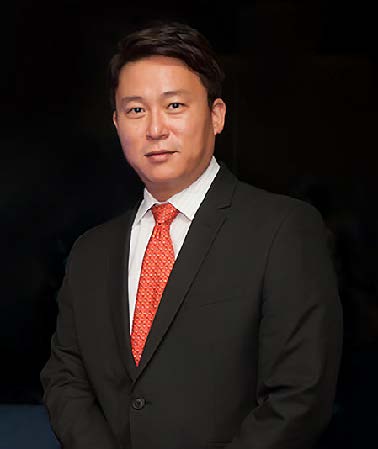
- Nam-Joon Cho, Ph.D. MRS-Singapore Chair, Professor School of Materials Science and Engineering, Nanyang Technological University
- Description:
-
The circular economy seeks to create a virtuous cycle of recycling materials and reducing waste to protect the planet with more sustainable practices. While progress has been made, there are calls to think beyond the recycling of existing materials as a means to an end and instead to imagine what is possible by creating new classes of and ways to produce innovative materials based on harmony with the environment. This cross-economy concept is based on a new growth model of “transforming waste to innovation,” enabling economic growth with a positive social impact. The key enabling factor is material innovation by utilizing fundamental engineering principles based on material innovation and sustainable processing to construct more harmonious ecosystems and networks. Indeed, new materials have been the foundation of disruptive technologies throughout history. From bronze, paper, and ceramics to steel, polymers, and semiconductors, each new class of material enabled far-reaching advances and defined the era. Seventy years ago, the synthesis of pure semiconductors as single crystals led to a complete transformation of the electronics industry and sweeping changes in communications, computing, and transportation. Today, inspired by the United Nation’s Sustainable Development Goals – a blueprint to achieve a better and more sustainable future for all – another new class of materials is emerging—one with both the potential to alleviate the environmental burden, provide radically new functions, and to challenge our notion of what constitutes a “material”. These materials combine (1) hybrid-composite design, combining disparate building blocks; (2) compartmentalized architecture, encapsulating desirable biomolecules while excluding others; and (3) hierarchical organization. Together, they enable unique and remarkable properties, including adaptability, plasticity, multi-functionality, and environmental responsiveness.
An extraordinary example is pollen, which encapsulates, protects, and transports male genetic material in flowering plants enabling the biological imperative of reproduction. In this talk, I will introduce our ongoing efforts to explore the materials science of pollen and to transform pollen into a valuable commodity to produce pollen-based materials innovation as a sustainable solution to numerous outstanding environmental challenges.